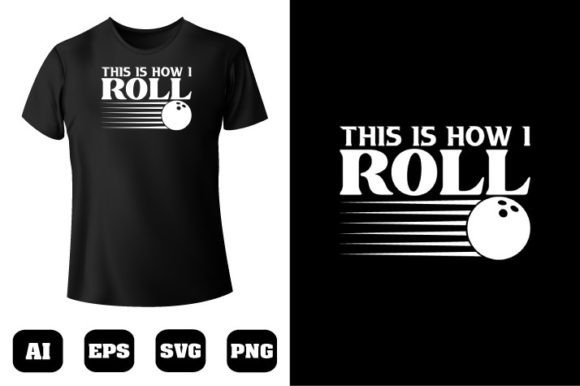
Strike Gold with This Ready-to-Print Bowling T-shirt Design 55
Creating a cohesive look for a bowling league or a retro-themed event requires more than just a good idea; it requires assets that can handle the specific demands of print production. This particular design file addresses the most common bottleneck in apparel creation: the gap between the digital file and the actual fabric. When you are working with apparel, the technical specifications of your file matter just as much as the artwork itself. This vector package is built to ensure that your design looks sharp, regardless of the printing method you choose, whether it is screen printing, direct-to-garment (DTG), or heat transfer vinyl.
Technical Integrity for Apparel Production
The primary value of this asset lies in its production-readiness. It is a common frustration for creators to purchase a design only to find that it is a flattened JPG that pixelates when scaled up. This collection, provided in Adobe Illustrator CC format, relies on 100% vector shapes. This means the mathematical lines that make up the artwork can be resized infinitely without losing quality. For a t-shirt designer, this is crucial. A logo that works on a chest print needs to look just as good on a large back print or a small sleeve detail. The inclusion of 300 DPI PNGs also covers the bases for DTG printers who require high-resolution raster files, ensuring that the "print-ready" claim holds up in a professional workflow.
Furthermore, the ability to change colors easily is a practical necessity. A bowling team often has specific team colors, or a business might have strict brand guidelines that need to be followed. Because the file uses editable vector shapes, you can swap out the palette in seconds within Illustrator. You are not locked into the creator’s original aesthetic; you have the flexibility to adapt the art to the specific needs of the client or the event. This adaptability extends the lifespan of the asset, allowing it to be reused across different seasons or team iterations without looking repetitive.
Visual Style and Branding Versatility
While the asset is optimized for bowling merchandise, its visual language—which typically blends sport with vintage Americana—makes it highly versatile for broader branding projects. The "retro" aesthetic is currently trending heavily in modern typography and logo design. These designs often feature bold outlines, dynamic shapes, and a sense of movement that is perfect for grabbing attention. If you are a small business owner looking to brand a bar, a diner, or an entertainment complex, a design with this energetic style can serve as a strong foundation for your visual identity.
Think beyond the cotton t-shirt. This type of bold, vector-based graphic works exceptionally well on:
- Packaging Design: Use elements of the design to create custom tissue paper, stickers, or box inserts for products that want to convey a fun, energetic vibe.
- Social Media Graphics: The high-contrast nature of these designs makes them perfect for Instagram posts or Facebook event headers where you need to stop the scroll.
- Merchandise: Beyond clothing, consider applying this to hard goods like koozies, enamel pins, or tote bags. The scalable vector format ensures the lines remain crisp on smaller items.
- Posters and Invitations: For a tournament or a party, the artwork can be blown up to poster size for signage or scaled down for digital invitations without requiring a redesign.
Streamlining the Creative Workflow
For designers and content creators, time is a finite resource. Building a design from scratch—sketching, digitizing, cleaning up vectors, and preparing color separations—can take hours. By utilizing a pre-made vector asset, you are essentially outsourcing the most tedious part of the process. This allows you to focus on the creative application rather than the technical execution. You can import the AI file into your library and immediately start testing it against different mockups or layouts.
However, to maintain professionalism, it is important to treat these assets as a starting point rather than the final product. To make the design truly yours:
- Customize the Typography: If the design includes text, consider pairing it with a complementary display font or script font to add a unique flair.
- Integrate Brand Elements: Don't just slap the design on a blank canvas. Use your brand’s specific color codes and perhaps overlay the design with a subtle texture that matches your company's aesthetic.
- Test for Readability: Even with high-quality vectors, always check how the design reads at a distance. Ensure that the contrast between the ink and the fabric is sufficient for legibility.
Ultimately, having a robust library of editable vector files is a strategic advantage for any creative entrepreneur. It allows for rapid prototyping and the ability to pitch ideas to clients with high-fidelity mockups. Whether you are designing for a local league, a corporate team-building event, or a vintage-inspired clothing line, starting with a high-quality, production-ready file ensures that the final printed product matches the vision you sold. This specific design offers the technical robustness needed for professional print shops and the aesthetic appeal required to stand out in a crowded market.
Bowling T-shirt Design 55: A Vector Asset for Dynamic Branding
Finding the right graphic for apparel can be a game of chance, but this particular asset changes the odds. It’s a complete, production-ready vector file designed for the niche of bowling but with a visual energy that translates far beyond the lanes. The real value here isn't just the artwork—it's the technical foundation. Delivered in Adobe Illustrator CC format, every element is a scalable vector shape. This means you can take this design and blow it up for a banner or shrink it for a pin without a single pixel of quality loss. For anyone in the business of creating merchandise, that kind of flexibility is non-negotiable.
Beyond the Lanes: Practical Applications for a Sporty Aesthetic
The "retro sport" vibe is a powerful design language. It communicates energy, competition, and a touch of nostalgic cool. While it’s perfect for a local bowling league’s team shirts, its utility is far broader. Think of a craft brewery launching a new pale ale; a vector graphic like this, with its bold lines and dynamic composition, could be adapted for can art or tap handle decals. A food truck specializing in classic American fare could use the style for menu boards or branded paper goods. The key is recognizing the underlying style—often a blend of vintage typography and illustrative flair—and applying it to contexts where that energy resonates.
Here’s where this asset becomes a practical tool in your kit:
- Event Marketing: Create cohesive materials for a corporate team-building event or a charity tournament. Use the core graphic across posters, social media event pages, and participant waivers for instant recognition.
- Digital Content: The included PNG and SVG files are perfect for web use. A blogger writing about retro hobbies could use a simplified element of the design as a custom bullet point or a section divider, adding personality to their layout.
- Packaging Inserts: For an e-commerce business selling vintage-style goods, a small, printed version of the design on a thank-you card or a discount flyer reinforces the brand aesthetic with every shipment.
Streamlining Your Design Process with Editable Assets
Efficiency is a competitive advantage. Starting a project from a blank canvas is time-consuming. This vector package acts as a sophisticated starting point. Because it’s 100% color changeable within Illustrator, you can immediately test how the design looks in your client’s specific brand colors. Is the palette too bold? Desaturate it. Does it need to feel more modern? Swap the vintage hues for a monochromatic scheme. This level of editability transforms the asset from a static image into a customizable toolkit.
Consider the workflow for creating a full brand identity around this style:
- Logo Refinement: Isolate a single, strong element from the design—perhaps a stylized pin or a custom letterform—to serve as the primary logo mark.
- Typography Pairing: The design likely includes its own typographic style. Use that as a guide to select complementary fonts for body copy and headlines across your other materials, ensuring visual consistency.
- Material Application: Test the design on different substrates. How does it look on a matte kraft paper versus a glossy sticker? The vector format ensures it adapts cleanly.
Ensuring Professional Results in Print and Digital
The promise of "high quality with 300 dpi" and "ready to print" is where many assets fail. This one is built to meet professional print shop standards. The vector paths are clean, which is essential for screen printing color separations. The high-resolution PNG ensures that if you opt for DTG printing or need a quick digital mockup, the detail remains sharp. For the designer, this eliminates the back-and-forth with print vendors about file quality—a common headache that delays projects.
When integrating this into your work, always keep the end medium in mind. A design that looks stunning on a back print might become an unreadable blob when embroidered on a small cap. Test your scaled versions. The advantage of having SVG and AI files is that you can make those adjustments confidently. You are not just buying a picture; you are acquiring a set of master components that you can reassemble to fit the exact requirements of your project, whether that’s a massive event backdrop or a subtle icon on a mobile app.